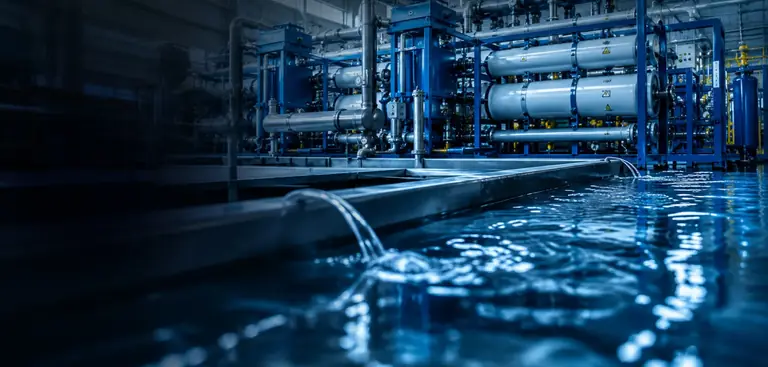
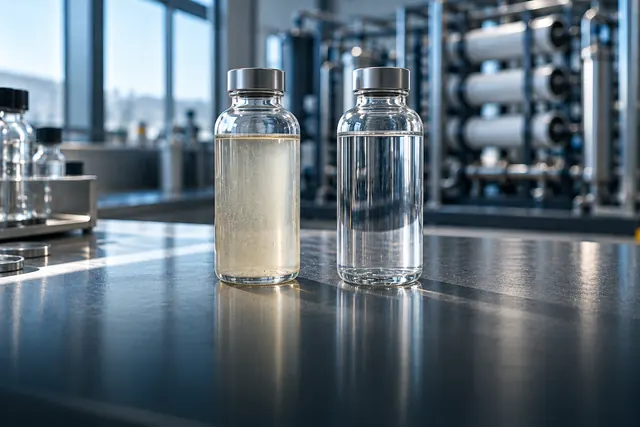

Unlike mains water, well water is drawn directly from underground without any pretreatment. Its composition therefore varies by region, well depth and season; there can even be differences between two samples taken from the same well at different times. The right treatment design starts with a full water analysis, not with guesswork: turbidity, iron, manganese, arsenic, nitrate, hardness, conductivity and microbiological parameters should be evaluated together.
The first step is coarse filtration. Suspended solids such as sand and gravel are retained by multimedia (sand) filters; if this stage is skipped, all the equipment that follows clogs early. An activated carbon filter is used for organic substances that spoil taste and odour, and for free chlorine. If the water contains iron and manganese, these ions are first oxidised and precipitated and then retained in a special iron and manganese removal filter; otherwise, the water turns yellow-brown when it comes into contact with air and leaves stains on surfaces.
If hardness is high, softening comes into play; if dissolved salts and conductivity are high, reverse osmosis. Parameters with low limit values, such as arsenic, require special adsorption media or membrane applications. The order of these stages is at least as important as the stages themselves: each unit is positioned so that it is protected by the step before it. A wrongly sequenced line may appear to work technically but multiplies consumable and maintenance costs.
The final step is disinfection. There is always a microbiological risk with well water; this risk is brought under control with UV disinfection or chlorination at the end of the line. After installation, periodic monitoring of water quality, recording of filter backwash frequency and repeating a full analysis at least once a year are necessary for the system to maintain its day-one performance.