
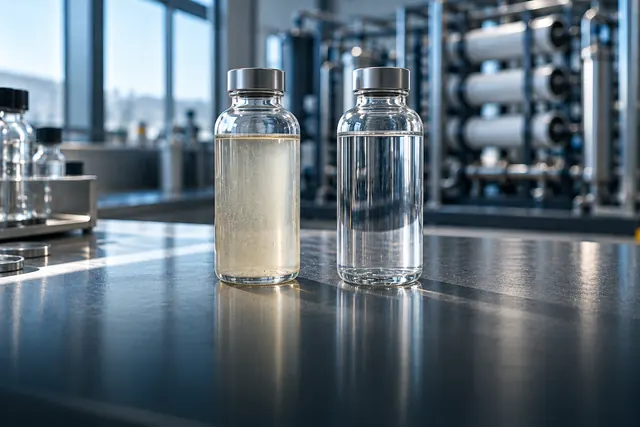
TDS (Total Dissolved Solids) indicates the amount of dissolved matter left behind after the water has been evaporated. Calcium, magnesium, sodium, chloride, sulphate and bicarbonate make up the largest share. In practice, conductivity is measured and TDS is estimated with a factor of 0.64–0.70.
Typical values
- Rainwater: 10–30 ppm
- Mains water (Istanbul): 100–300 ppm
- Well water (Thrace): 400–1,500 ppm
- Seawater: ~35,000 ppm
Why does it matter?
TDS determines the membrane selection, operating pressure and recovery rate of a reverse osmosis system. For drinking water, the WHO considers below 600 ppm to be "good"; in boiler feed water, conductivity/TDS directly affects the blowdown rate.