Drag
Skip to content
Your reliable partner in water treatment Get a quote
Education

Water Treatment for Schools and Universities

Drinking water safety for thousands of students on campus, pure water for laboratories and protection of canteen and boiler lines from limescale: reliable, easy-to-maintain and traceable systems for educational institutions.

  1. SourceRaw water
  2. Stage 1Softening
  3. Stage 2Water dispenser with purification
  4. Stage 3Pure water
  5. OutputSafe drinking water

Water in educational institutions

In schools and universities, water serves three different needs: drinking water consumed directly by students, canteen and heating systems, and laboratory and research units. Each has different quality requirements, and what they all have in common is continuity: a water outage or quality problem on a campus affects thousands of people at the same time.

Typical needs

AreaRequirementSolution
Drinking water points (dispensers, fountains)TS 266-compliant, chlorine-free, good-tasting waterCentral UF + UV or dispensers with purification (RO/UF)
CanteenScale-free, hygienicSoftening + carbon + UV
Heating plantBoiler feed waterSoftening, RO if necessary
Chemistry / biology laboratoriesType II–III pure waterRO + DI cartridge, laboratory-type units
DormitoriesScale and microbiological safetyCentral softening + tank disinfection

Dispensers with purification: the most visible benefit

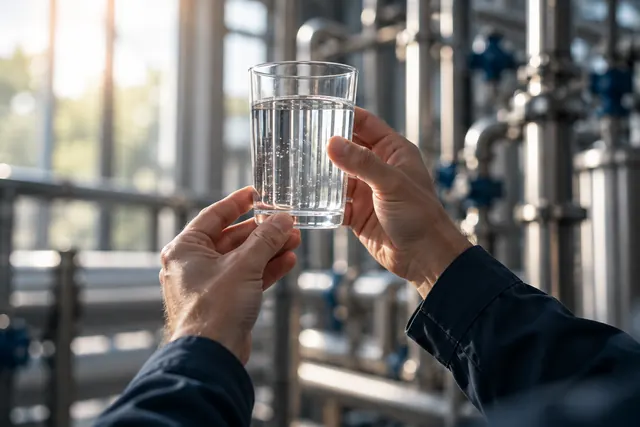
Instead of carrying bottled water, mains-connected dispensers with RO/UF purification are both hygienic and economical: in a medium-sized school, the annual cost of water bottles usually pays back the system investment within one academic year. Filter changes and disinfection are managed with a termly maintenance contract.

How do we proceed?

  1. Campus survey, mapping of the points of use, water analysis.
  2. Comparative quotation for central and point-of-use solutions.
  3. Installation and maintenance schedule planned around the holiday periods.
// FREQUENTLY ASKED QUESTIONS

Common questions

The right system starts with an analysis of the raw water: hardness, conductivity (TDS), turbidity, iron and manganese, and microbiological values determine which treatment stages are needed. The second criterion is the required flow rate (m³/h) and daily consumption, and the third is the intended use of the water (boiler feed water, process water, drinking water, washing).

At Today Arıtım, we first analyse the water in our own laboratory, then design the filtration, softening, reverse osmosis or ultrafiltration stages according to the capacity of your business.

Ultrafiltration uses a membrane with 0.01 micron pores to retain suspended solids, turbidity, bacteria and viruses; dissolved salts pass through. It is used for pretreatment and disinfection.

Reverse osmosis, on the other hand, separates 90-99% of dissolved salts and ions with a semi-permeable membrane; it is preferred in boiler, process, pharmaceutical and food applications that require near-pure water. In most industrial plants, UF works together with RO as its pretreatment stage.

A softening system prevents the formation of limescale (permanent hardness) by exchanging the calcium and magnesium ions in the water for sodium through ion exchange. It is needed in every facility where heat is transferred, above all boilers and steam generators, cooling towers, industrial dishwashers and washing machines, textile dyehouses, hotels and canteens, to prevent efficiency losses and breakdowns caused by limescale.

The process has four steps: site survey and water analysis → design and quotation → manufacturing and installation → commissioning and training. Installation time varies with the capacity of the system; we share a clear schedule after the site survey.

With our head office in Avcılar, Istanbul and our production plant in Çorlu, Tekirdağ, we provide on-site service across the Marmara Region and project-based service throughout Turkey.

Free water analysis

Let's choose the right system for your facility together

We collect your sample, analyse it in our own laboratory and present a system proposal tailored to you in a report based on the results.

  • Our own laboratory
  • On-site survey
  • Written report