
How do Reverse Osmosis Systems work?
Reverse osmosis is the technology that treats high-concentration water containing dissolved salts by 90-99% to obtain water close to pure water quality. When two solutions are separated by a semi-permeable membrane, the equalisation of their ion concentrations is called osmosis; when a pressure higher than the osmotic pressure is applied to this process, it becomes reverse osmosis.
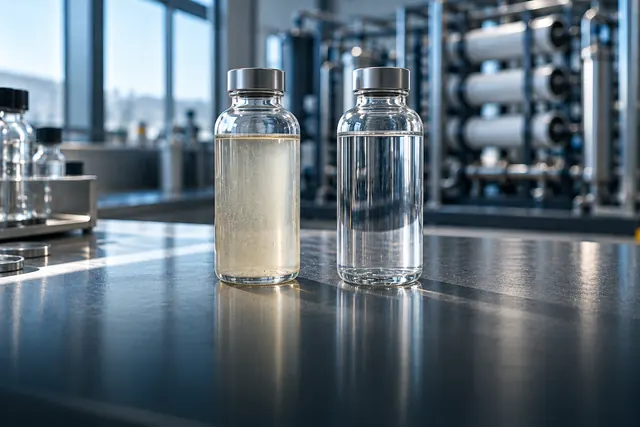
The membrane lets only pure water through; dissolved organic and inorganic substances, salts, heavy metals, viruses and bacteria in the water are separated out. The membrane type most commonly used in our systems is the TFC (thin-film composite) spiral-wound membrane. Standard diameters are 2.5", 4" and 8", with a standard length of 40" (about 1 metre).
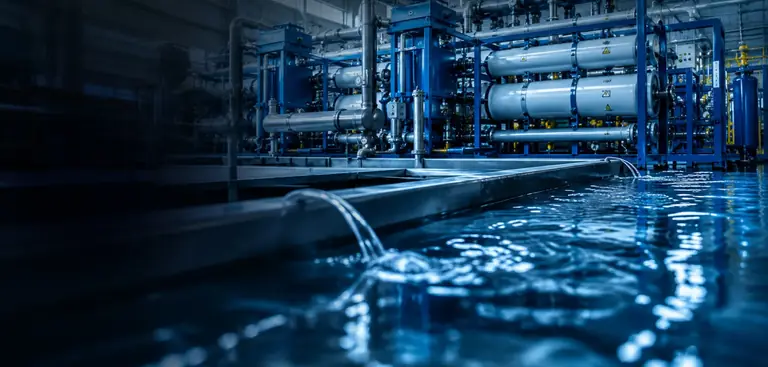
The system is installed as a complete line with a high-pressure pump, pressure vessels, a prefilter group and an antiscalant dosing unit. A conductivity meter and an automatic flushing programme continuously monitor product water quality. It is used for boiler feed water, drinking water, plating and painting processes, and pharmaceutical and cosmetics production.
Its place in the treatment line
- Stage 1Filtration
- Stage 2Softening
- Stage 3Reverse osmosis / UF
- Stage 4Disinfection