
The role of water in food
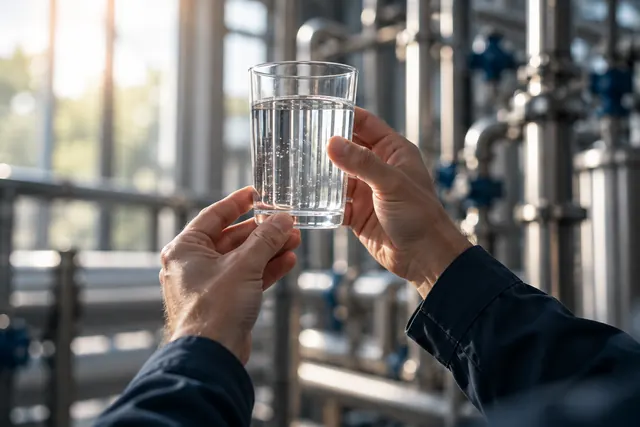
In the production of coffee, tea, ice cream, dough, sauces and beverages, water makes up 60–98% of the product. A chlorine taste, high hardness and an irregular mineral content spoil the flavour of the product, while limescale is the number one cause of breakdowns in espresso machines, steam boilers and dishwashers. It is a legal requirement in Turkey for the water used in food businesses to meet the criteria of the Regulation on Water Intended for Human Consumption and TS 266.
Typical water problems
- Chlorine and chloramine: a bitter or chemical taste in coffee and tea, loss of yeast activity in dough.
- Hardness: scale in espresso machines, combi ovens and dishwashers, heating element failures.
- Microbiological risk: biofilm in storage tanks and long pipe runs.
- Variable TDS: repeatability problems in beverage recipes.
Recommended treatment stages
| Application | Recommended system | Target water quality |
|---|---|---|
| Café, restaurant, patisserie | Sediment + activated carbon + softening (or a cartridge scale inhibitor) | Chlorine 0, hardness 4–8 °fH (mineral balance preserved for coffee) |
| Industrial kitchen, catering plant | Multimedia filter + duplex softener + UV | Hardness < 1 °fH, microbiologically safe |
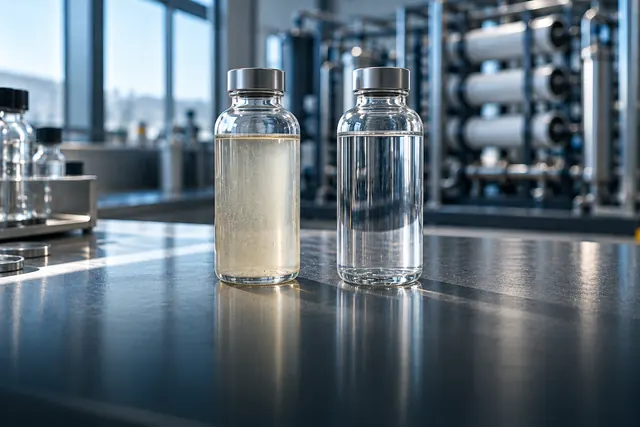
| Beverage, ice cream, confectionery production | Prefiltration + RO + remineralisation + UV | TDS 50–150 ppm, repeatable recipes |
| Steam boiler (baking, cooking) | Softening + RO | Conductivity < 50 µS/cm, hardness 0 |
Points to watch
Completely pure water is not wanted for coffee and tea; the SCA (Specialty Coffee Association) recommends a TDS range of 50–175 ppm. That is why remineralisation or a bypass blend is planned after RO. All filter housings and tanks used on food-contact surfaces are selected from food-grade materials (compliant with NSF/EN 1935); UV lamps are replaced annually and activated carbon cartridges every 3–6 months.
How do we proceed?
- Water analysis (chlorine, hardness, TDS, microbiology) and the equipment list.
- Decision on a central or point-of-use (POU) solution according to the points of use.
- Installation, hygienic commissioning and a maintenance schedule.